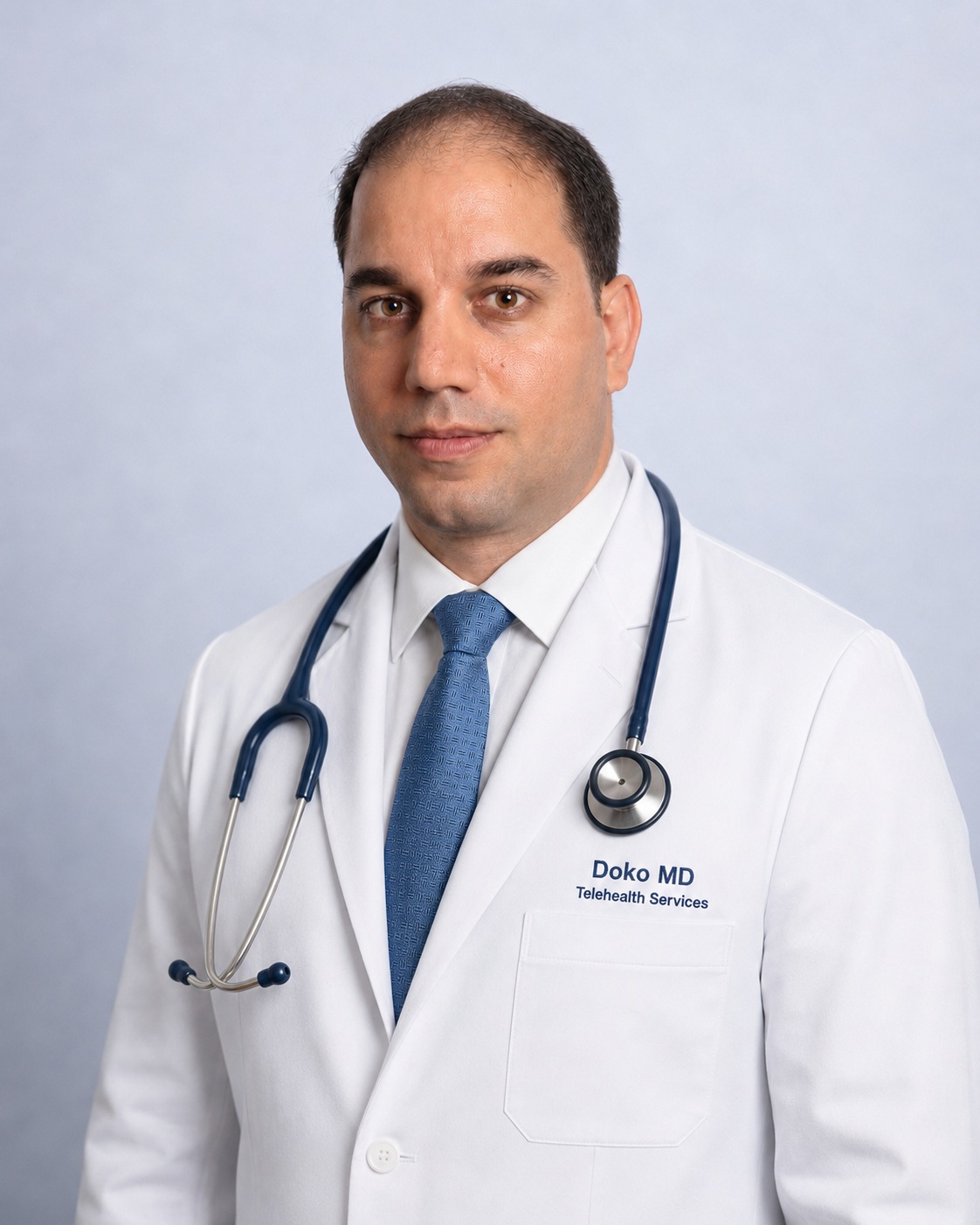
Dr. Andrew Morel, MD
Lead Diabetes Care
Doko MD supports Miami-area patients with virtual diabetes follow-up built around traffic-heavy schedules, heat, hydration, travel, and long-term glucose planning.
Designed for patients who want diabetes support that feels practical for South Florida life instead of delayed, fragmented follow-up.
Connect online with experienced clinicians supporting diabetes care, metabolic health, medication follow-up, and ongoing virtual care planning.
Lead Diabetes Care

Board-Certified Family Nurse Practitioner

Metabolic Health

Preventive Care

Urgent Visit Care
Published: May 28, 2026
Last updated: May 28, 2026
Editorial focus: Miami telehealth diabetes care, CGM education, medication review, and payment guidance
Clinical review: Doko MD Clinical Review Team
Managing diabetes in Miami often means working around traffic, hot weather, unpredictable meal timing, and schedules that may include office work, hospitality, travel, or family caregiving in the same week. Patients usually need more than a quick refill. They need follow-up that helps connect daily routines to glucose patterns and treatment decisions.
This page explains how online diabetes care may help Miami patients review blood sugar data, medications, CGM reports, hydration-related concerns, and the practical questions that come up when long-term follow-up has to fit real South Florida life.
In Miami, the challenge is often consistency. Patients may postpone follow-up because of traffic, long workdays, travel plans, or the difficulty of adding one more in-person appointment to an already full schedule. Telehealth can help when the main need is reviewing readings, side effects, refill questions, or whether the current plan still matches the patient's goals.
It is especially useful when the patient already has home glucose logs, recent labs, or CGM reports ready to discuss. The value comes from careful interpretation and next-step planning, not just from holding another appointment.
Miami patients often ask whether heat, long days outdoors, inconsistent meal timing, and hydration changes may be affecting glucose readings. In warm-weather settings, those routine factors can matter more than patients expect, especially if activity levels or medication timing shift from one day to the next.
Virtual follow-up can help patients review how hydration, outdoor routines, travel days, late meals, or changing sleep patterns may be contributing to highs, lows, or harder-to-explain glucose swings.
Common diabetes warning signs include increased thirst, frequent urination, fatigue, blurry vision, recurrent infections, slow-healing cuts, numbness or tingling in the feet, and unexplained weight changes. Patients with known diabetes may also need review when they notice repeated fasting highs, more low blood sugar, or worsening energy despite staying on treatment.
Those concerns may be appropriate for telehealth when the patient is stable and the main need is follow-up, pattern review, or medication discussion. Severe vomiting, dehydration, chest pain, confusion, trouble breathing, or suspected diabetic ketoacidosis require urgent in-person care.
Diabetes treatment is built around more than one number. A strong plan looks at symptoms, A1C, fasting readings, post-meal spikes, low blood sugar risk, weight-related goals, kidney health, cardiovascular risk, and what the patient can realistically maintain. That is why treatment decisions are individualized.
Miami patients commonly ask about medications such as metformin, insulin, GLP-1 therapies, and other diabetes treatments. The purpose of a telehealth visit is not to promise one specific medicine ahead of time. It is to review whether the current approach is working, whether another option may fit better, and what side effects or safety concerns matter for the patient's situation.
Medication education is also a major part of follow-up. Patients often need help understanding timing, meal relationships, low blood sugar precautions, dose changes, and what to do if readings start moving in the wrong direction.
A continuous glucose monitor, or CGM, gives patients a clearer view of what their glucose is doing throughout the day and night. Instead of isolated checks, the patient can see trends, overnight movement, and how meals or exercise affect numbers in real time.
That matters because diabetes management is often about patterns rather than single readings. A CGM may help identify frequent overnight highs, unexpected lows, or long post-meal spikes that are hard to catch otherwise. Telehealth works well for CGM support because the visit can focus on interpreting reports, discussing alarms, and turning the data into practical care changes.
The process usually begins with intake information about diagnosis, medications, symptoms, labs, and the reason the patient is seeking care. A clinician reviews that information and determines whether the visit is appropriate for virtual follow-up.
During the online appointment, the discussion may cover symptoms, glucose logs, CGM data, medication tolerance, refill issues, and treatment goals. After the visit, patients may receive an updated care plan, education, prescriptions or supply guidance when appropriate, and a timeline for follow-up.
Many Miami patients search for diabetes care because they need answers about more than symptoms alone. They want to know whether the visit is covered, whether CGM supplies may go through insurance, whether prior authorization is likely, and what self-pay may look like if coverage is limited.
Those details vary by plan, so good telehealth support includes realistic payment guidance instead of vague assumptions. The goal is to reduce uncertainty before treatment decisions are made.
Yes. Many Miami patients use telehealth for diabetes follow-up, medication review, CGM education, and practical glucose planning, although urgent symptoms still require in-person care.
Many Miami patients want structured diabetes review that fits traffic-heavy schedules, travel, and repeat follow-up needs without delaying care.
Yes. Virtual follow-up can include discussion of hydration, meal timing, outdoor activity, and how heat may affect glucose patterns or medication routines.
Yes. Many virtual diabetes visits include CGM trend review, discussion of overnight highs or lows, time in range, and practical next steps.
Severe vomiting, dehydration, chest pain, confusion, trouble breathing, fainting, or symptoms of dangerously high or low blood sugar need urgent in-person evaluation.
Patients who want a broader statewide overview can visit Florida virtual diabetes care. For other local Florida pages, explore Orlando, Tampa, or Jacksonville.